

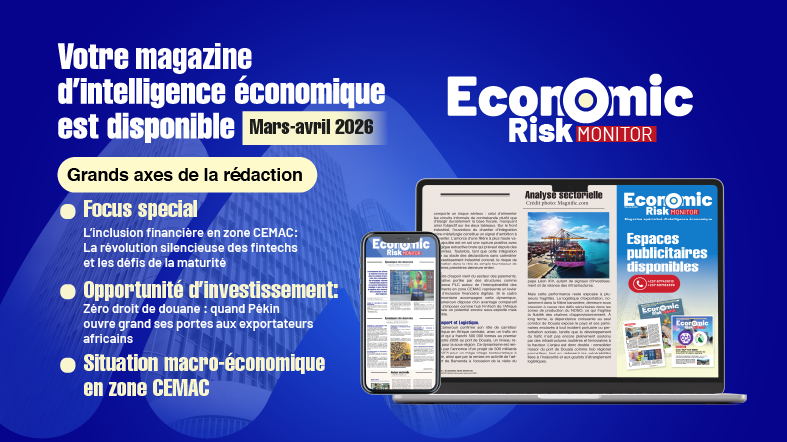
Summary — ERM No. 005, March-April 2026
Cameroon is undergoing a structural transformation marked by the resurgence of state intervention in key sectors. The renationalization of ENEO as SOCADEL symbolizes this quest for energy sovereignty, despite a monthly deficit of 13 billion FCFA. On the macroeconomic front, growth is projected at 3.3% and inflation has fallen below the CEMAC threshold to 2.9%, but margins are shrinking: the 580 billion FCFA mobilization program for Q2 2026 poses a serious risk of crowding out SMEs, in a context where the BEAC's key interest rate remains restrictive at 4.75%. The external sector is under pressure with a record trade deficit of 2,145 billion FCFA and an 87% drop in oil exports to the USA over five years.
This special focus analyzes the silent fintech revolution in the CEMAC zone: 51 million mobile money accounts, 3.74 billion transactions, and outstanding balances up by 56.77%. Cameroon alone accounts for 65% of the regional volume. But behind the figures, three vulnerabilities persist: multiple account ownership, overvaluation of service points, and the hegemony of cash (10 trillion FCFA outside digital channels). The challenge by 2030 is full interoperability and avoiding punitive taxation.
This month's opportunity lies in Duty-Free, Quota-Free access to the Chinese market within the framework of the FOCAC, targeting processed products: specialty agribusiness (Penja pepper, cocoa, coffee), natural cosmetics, and wood processing. The key to success remains investment in SPS/HACCP certifications.